

February 16, 2026
Last month, OpenAI officially confirmed what many had speculated: advertising is coming to ChatGPT. In their blog post titled “Our approach to advertising and expanding access to ChatGPT,” the company outlined a carefully controlled rollout of sponsored content for free-tier users and the new $8/month ChatGPT Go plan. This marks a significant departure from earlier statements positioning ads as a “last resort.” OpenAI now views advertising as a necessary step to sustain massive operational costs while keeping advanced AI accessible to hundreds of millions of weekly users.
So, how will this move affect the paid search and overall digital advertising landscape?
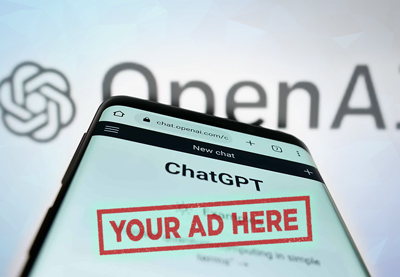 How the Ads Actually Work
The ads will appear at the bottom of ChatGPT responses, clearly labeled as “Sponsored.” They are contextually triggered to only surface when a conversation naturally involves commercial intent, such as product recommendations, service comparisons, or purchase-related questions. Crucially, OpenAI insists that sponsored content will never alter or bias the AI-generated answer above it. Key safeguards include:
- No use of private conversation data for targeting or sale to advertisers
- Strict exclusion of sensitive categories (health, politics, mental health, etc.)
- No ads for users under 18 or in paid tiers (Plus, Pro, Business, Enterprise)
- Easy dismissal, feedback options, and the ability to turn off personalization
Why OpenAI Changed Course
The economics are straightforward. Training and inference for AI models remain extraordinarily expensive. Subscription revenue from paid tiers is growing but still insufficient to subsidize free access at scale. By introducing ads to the free and low-cost tiers, OpenAI can continue expanding global reach while funding next-generation research and infrastructure. The approach mirrors how Google, Meta, and YouTube have long balanced free consumer products with targeted advertising, except now the medium is conversational AI rather than search results or social feeds.
A Direct Threat to Traditional Paid Search
Google’s dominance in paid search rests on users typing keyword queries and seeing ads alongside (or above) organic results. ChatGPT flips this model: users describe needs in rich, natural-language conversations that often reveal much stronger commercial intent.
A query like “best laptops for graphic design under $1000” in ChatGPT could prompt a helpful list followed by a relevant sponsored suggestion at the bottom. Early reports estimate CPMs around $60, well above typical social-media rates and closer to premium television inventory. This high-intent, high-engagement placement could command premium pricing and siphon spend from traditional search. Advertisers face a steep entry point (minimum $200,000 commitments initially), but those who gain access may capture users at the exact moment of decision, potentially delivering superior ROI compared to broad keyword bidding.
Reshaping the Digital Advertising Landscape
OpenAI’s move accelerates the fragmentation of digital ad inventory. While Google has repeatedly stated no plans to add ads to Gemini, OpenAI is betting that ad-supported access will fuel faster growth. Success here could pressure competitors like Anthropic, Meta AI, Perplexity, and others to follow suit, creating a multi-front battle for conversational ad dollars.
Marketers stand to gain a powerful new performance channel, especially in e-commerce, travel, finance, and local services. Yet risks remain: user backlash if the experience feels “ruined,” trust erosion from perceived intrusiveness, and early measurement limitations (no pixel tracking yet).
AI as the Next Ad Frontier
OpenAI’s advertising entry is more than a revenue tactic: it signals that conversational interfaces are becoming the dominant discovery layer for many users. As people increasingly bypass traditional search for AI chat, the highest-value ad real estate will follow intent to these new surfaces. Brands that invest in comprehensive AEO and GEO strategies can position themselves well to improve their discoverability.
Billions in ad spend could gradually shift toward AI-powered conversational commerce. Incumbents who fail to adapt risk losing ground, while early movers and agile brands gain an edge in capturing the next wave of consumer attention.This isn’t merely monetization. It’s the redefinition of how discovery, intent, and commerce intersect in the AI era.